


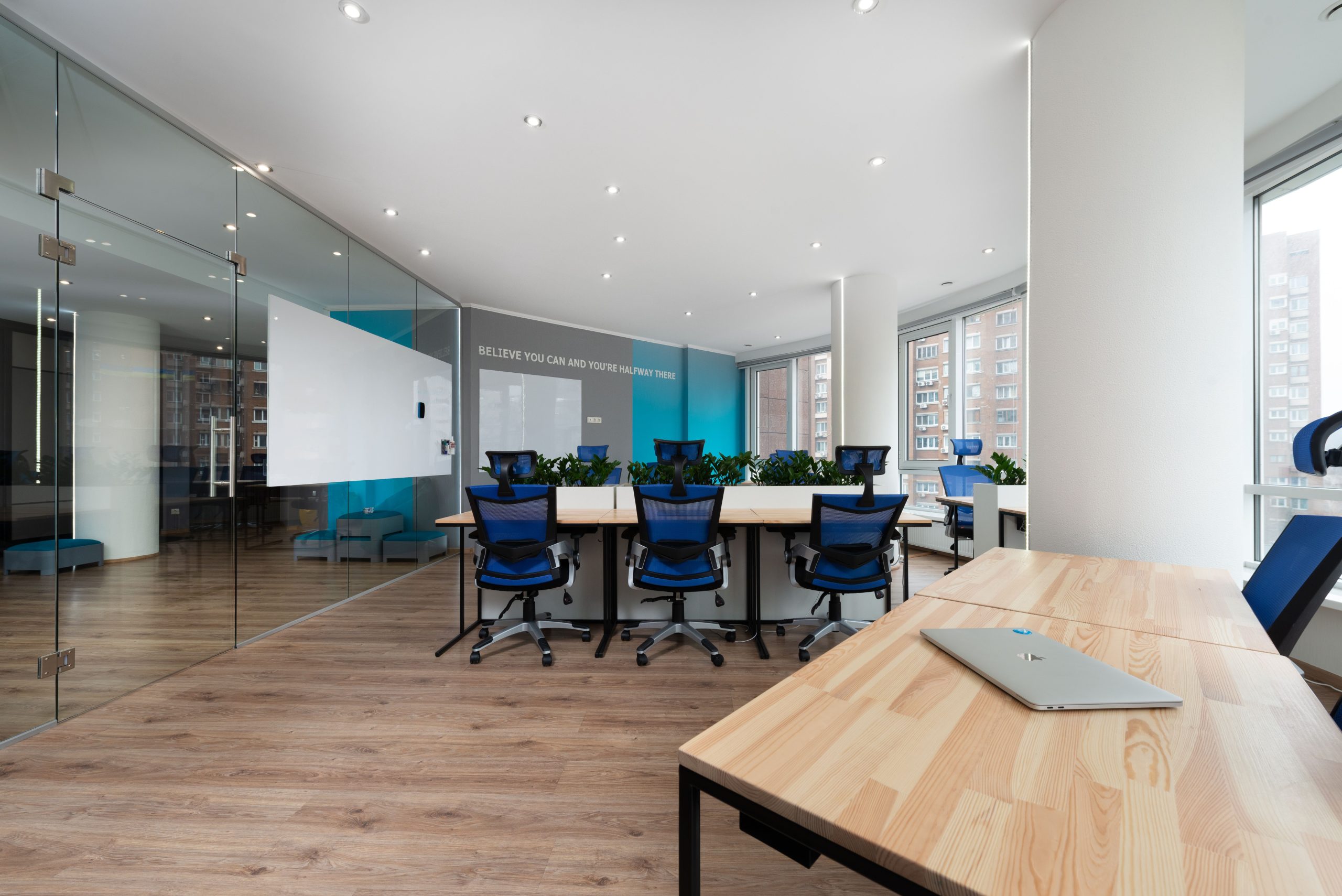
The ability of movable and operable wall systems to transform space, adapt environments, improve acoustics, and elevate design aesthetics significantly boosts workplace productivity and creativity in a cost-effective manner. Beyond spatial optimization, these flexible partitions directly enhance employee mental well-being, yielding substantial returns on organizational health and overall performance.
1. Spatial Flexibility & Cost Efficiency
- Transforming Space & Maximizing Utilization: Movable walls allow for dynamic, real-time changes to workplace layouts, accommodating varying team sizes and evolving workstyles. This ensures the physical environment continuously aligns with workforce needs, repurposing areas for distinct functions on demand, maximizing square footage, and providing immediate private spaces for focused individual work or confidential meetings.
- Streamlined Operations & Work-Life Integration: Flexible partitions support modern agile workflows, hot-desking, and hybrid setups. Providing an environment that effortlessly adapts to daily tasks improves operational efficiency and supports employee work-life balance, driving job satisfaction and organizational loyalty.
- Long-Term Cost Effectiveness & Accelerated Depreciation: While initial capital costs may exceed standard drywall installation, movable walls deliver dramatic long-term financial advantages by eliminating future demolition, alteration, and construction expenses. Because operable walls are classified as tangible personal property (furniture, fixtures, and equipment) rather than permanent real property, they qualify for accelerated tax depreciation under MACRS 7-year asset classification (compared to the 39-year timeline for fixed commercial real estate) as well as full first-year expensing under IRS Section 179.
- Environmental Sustainability & Circular Design: Reusable wall systems support circular building practices by eliminating drywall waste from future tenant fit outs. Modular construction significantly lowers embodied carbon, minimizes the continuous consumption of new building raw materials, and reduces an organization’s lifecycle carbon footprint.
2. Acoustic Performance & Aesthetic Appeal
- Technical Acoustic Isolation (STC Performance): Modern operable partitions are rigorously tested under ASTM E90 standards to deliver high Sound Transmission Class (STC) ratings, typically ranging from STC 40–43 for light commercial separation up to STC 50–56+ for full acoustic isolation equal to a solid concrete wall. Combined with internal sound-dampening insulation, perimeter mechanical sweep seals, and optional acoustic face panels (such as fabric or micro-perforated wood with Noise Reduction Coefficients up to 0.75+ NRC), these systems prevent noise flanking between adjacent spaces. Minimizing background chatter reduces cognitive fatigue, protects speech privacy, and fosters clearer communication during collaborative sessions.
- Aesthetic Appeal & Brand Reputation: Customized with a wide array of finishes—from warm architectural wood veneers and high-pressure laminates to writable whiteboard surfaces and acoustic fabrics—movable walls enhance visual appeal. A well-designed office elevates employee morale, reinforces corporate identity, impresses clients, and serves as a powerful magnet for top talent.
- Promoting Natural Light: Glass movable wall systems maximize daylight penetration deep into the building core without sacrificing sound control. Ample natural light regulates circadian rhythms, improves sleep patterns, combats eye strain and fatigue from prolonged screen time, and significantly boosts daytime alertness and mood.
3. Sustainability Standards & LEED Contributions
Operable wall systems directly contribute to earning valuable points toward LEED v4.1 and LEED v5 certification across several key categories:
- Materials and Resources (MR): Contributes to Building Product Disclosure and Optimization credits via Environmental Product Declarations (EPDs), Health Product Declarations (HPDs), high recycled aluminum/steel content, and circular design that prevents landfill waste during spatial reconfigurations.
- Indoor Environmental Quality (EQ): Earns points under Low-Emitting Materials (LEM) by utilizing low-VOC finishes, zero-formaldehyde composite core materials, and non-toxic sealants certified to CDPH Standard Method v1.2.
- Daylight and Quality Views (EQ): Glazed movable wall systems optimize indoor daylight distribution and maintain direct lines of sight to exterior views for building occupants.
- Acoustic Performance (EQ): Assists projects in achieving strict indoor acoustic performance thresholds by meeting specified STC ratings between adjacent spaces.
4. Mental Health, Inclusion, and Company Culture
- Reducing Stress & Enhancing Well-Being: Movable walls enable organizations to establish dedicated quiet zones and restorative spaces on demand. Access to acoustically controlled environments, combined with natural light and optimized ventilation, lowers cortisol levels, reduces workplace burnout, and promotes relaxation.
- Empowering Diverse Needs & Autonomy: Allowing associates a sense of control over their immediate physical environment—giving them the freedom to reconfigure space for quiet concentration or group interaction—enhances personal autonomy and psychological comfort.
- Promoting Diversity, Equity, and Inclusion (DEI): Operable walls break down physical and hierarchical barriers, creating an open, accessible workplace. Smooth, barrier-free floor transitions assist mobility and ensure compliance with accessibility standards (such as the ADA), while versatile spaces ensure employees of all working styles feel accommodated.
- Fostering Community & Spontaneous Collaboration: By quickly scaling meeting spaces to fit any group size or event format, movable walls encourage spontaneous interactions, cross-departmental networking, and team building. This reinforces a supportive culture, deepens social connection, and strengthens a sense of belonging.
Conclusion
Movable walls represent far more than an architectural trend—they are a strategic, future-proof investment. By unifying spatial adaptability, high STC acoustic control, favorable tax depreciation benefits, and LEED-compliant sustainable design, operable wall systems empower organizations to build resilient, creative, and healthy workplaces positioned for long-term success.